
The Benefits of Adding Mulch to Your Landscape
Mulch is a ground covering material—either organic or inorganic—used in landscaping to protect and improve the soil. Its use has grown rapidly in both residential and commercial landscapes due to its versatility and effectiveness. Whether you’re looking to reduce garden maintenance or enhance your yard’s visual appeal, the benefits of mulch are hard to ignore. In this post, we’ll explore the many mulching benefits, the types of mulch available, and practical landscaping tips to help you make the most of your outdoor space.
What Is Mulch and What Types Are Available?
Mulch is any material spread over the soil surface to improve soil conditions and plant health. There are two main types:
-
Organic mulch: Made from natural materials like wood chips, bark, shredded leaves, straw, and compost. These break down over time and enrich the soil.
-
Inorganic mulch: Includes gravel, rubber, and landscape fabric. These don’t decompose but provide long-lasting coverage.
Choosing the right landscaping mulch depends on your goals. Organic mulch is great for improving soil health, while inorganic mulch is better suited for permanent pathways or weed control in non-planting areas.
Key Benefits of Mulching Your Landscape
Before we go over some landscaping tips, let’s discuss how mulch enhances your yard. Using mulch is more than just a finishing touch—it plays a crucial role in the health and maintenance of your yard. Here are some of the top benefits of mulch:
Moisture Retention
One of the most essential mulching benefits is its ability to retain soil moisture. By covering the ground, mulch reduces evaporation and helps your soil stay hydrated longer. This can significantly cut down on watering—especially important in dry climates or during droughts.
Mulch for Weed Control
If you’re constantly battling weeds, mulch for weed control is your best ally. A proper layer of landscaping mulch blocks sunlight, preventing weed seeds from germinating. This natural barrier reduces the need for chemical herbicides and keeps garden beds looking neat and clean. Mulch for weed control is a truly sustainable solution. Using mulch for weed control is a smart workaround for savvy lawn care enthusiasts.
Soil Temperature Regulation
Mulch acts like a natural insulator. In summer, it keeps soil cool, and in winter, it protects roots from freezing temperatures. This kind of temperature regulation promotes strong, healthy root systems—one of the lesser-known but powerful benefits of mulch.
Erosion Control
On sloped or uneven terrain, landscaping mulch helps hold soil in place, preventing it from being washed away during heavy rain or blown off by wind. It’s an effective, eco-friendly way to maintain the structure of your garden beds and reduce runoff.
Improved Soil Health
Organic mulch decomposes over time, adding nutrients back into the soil. This not only feeds your plants but also fosters beneficial organisms like microbes and earthworms. These soil enhancers help improve aeration and nutrient availability—one of the top long-term mulching benefits.
Aesthetic Appeal
Aside from function, mulch enhances the look of your landscape. Available in various colors and textures, it can be tailored to match your home’s style. Clean lines and uniform coverage give your yard a polished, professional finish, boosting curb appeal effortlessly.
Pest Control (with the Right Mulch)
Speaking of the benefits of mulch, some types of landscaping mulch—such as cedar or cypress—naturally repel insects. Placing these mulches near your home’s foundation or garden beds can reduce unwanted pests and protect your plants and structures alike.
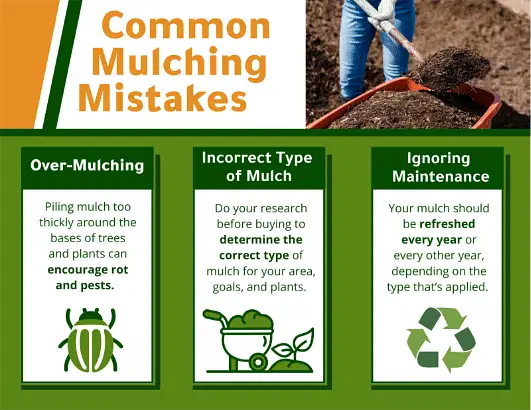
Common Mistakes to Avoid When Mulching
While the benefits of mulch are numerous, mistakes can reduce its effectiveness or even harm your plants. Here are a few to watch out for:
-
Over-mulching or “volcano mulching”: Piling mulch high around tree trunks can cause rot and invite pests.
-
Using the wrong mulch: For example, wood chips may be too coarse for vegetable gardens.
-
Ignoring maintenance: Mulch breaks down and thins out over time. Refresh it at least once a year to maintain coverage and effectiveness. \
How to Apply Mulch Properly
To get the most out of your landscaping mulch, follow these expert landscaping tips to reap the most mulching benefits:
-
Depth matters: Apply 2–4 inches of mulch for most areas. Too little won’t suppress weeds; too much can suffocate roots.
-
Best time to mulch: Spring and fall are ideal, but you can mulch any time the ground isn’t frozen. If you choose to mulch during winter, make sure to remove it gradually as temperatures increase to allow the soil to warm back up.
-
Special care for different zones: Keep mulch a few inches away from tree trunks and plant stems. In flower beds and veggie gardens, use finely shredded mulch for even coverage.
From conserving moisture to deterring weeds, the benefits of mulch extend far beyond aesthetics. Whether you want to use mulch for weed control, to boost soil health, or to improve curb appeal, landscaping mulch is a cost-effective and versatile solution. Follow these landscaping tips and you’ll enjoy lasting mulching benefits across all seasons.
Ready to upgrade your landscape but don’t have the time or tools? Contact Land Concepts today for expert advice, premium mulch installation, and custom landscaping solutions. Want to learn more landscaping tips and tricks? Check out this blog about customized landscape design.